The unveiling of the ‘split’ RLS sculpture at the Alum Chine seafront on Monday 22nd June was the culmination of years of hard work by Bournemouth, Christchurch & Poole Council [BCP], who had applied for a grant from the UK Government’s Local Regeneration Fund [LRF] in 2022.The aim of the LRF was to focus on areas of socio-economic deprivation, utilising themes of identity, and working with communities to reflect a distinctive personality of place – and Bournemouth’s connection with the great Scottish writer Robert Louis Stevenson ensured that they fitted the bill.
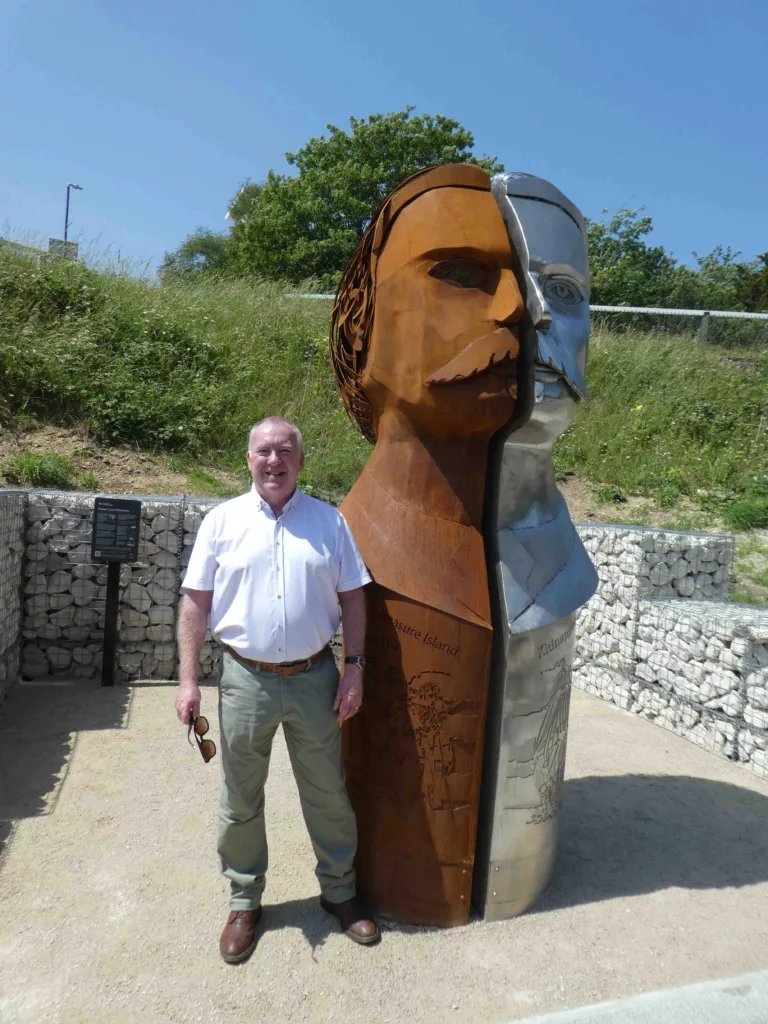
Sculptor Tim Ward of Circling the Square in Essex won with his entry, a striking ‘split head’ design of Robert Louis Stevenson.
The subject reflects the duality of some of Stevenson’s characters. The darkness and light of Dr Jekyll, and the good and bad of Long John Silver for example.
Accordingly, it was produced in two distinct materials. Polished marine grade stainless steel for one half, and for warmth, rusting ‘Core 10’ steel for the other. According to Tim, the rusting steel just gets stronger as it is exposed to the elements.
Stevenson and his wife Fanny lived in the Westbourne district of Bournemouth between 1885 and 1887 and, despite being very poorly, he wrote the novella The Strange Case of Dr Jekyll and Mr Hyde. He called his house Skerryvore, after Scotland’s tallest lighthouse, located off the west coast of Scotland, 11 miles southwest of Tiree. It was built by the writer’s uncle, Alan Stevenson, and was completed in 1844. It was Stevenson’s father Thomas who bought Skerryvore as a wedding gift for Fanny. Best-selling Treasure Island, first published in 1883, had already made Stevenson’s name. RLS thought Skerryvore “bon pour la poesie” – “good for poetry” – and in addition to Dr Jekyll produced his acclaimed A Child’s Garden of Verses there as well.
The ‘split head’ was constructed from laser cut and welded sheet steel to form a skin over a lattice framework.
As part of his community engagement brief, Tim worked with the Friends of Skerryvore and children from St Michael’s Church of England Primary School, and duly worked some of Stevenson’s storytelling into the artwork.
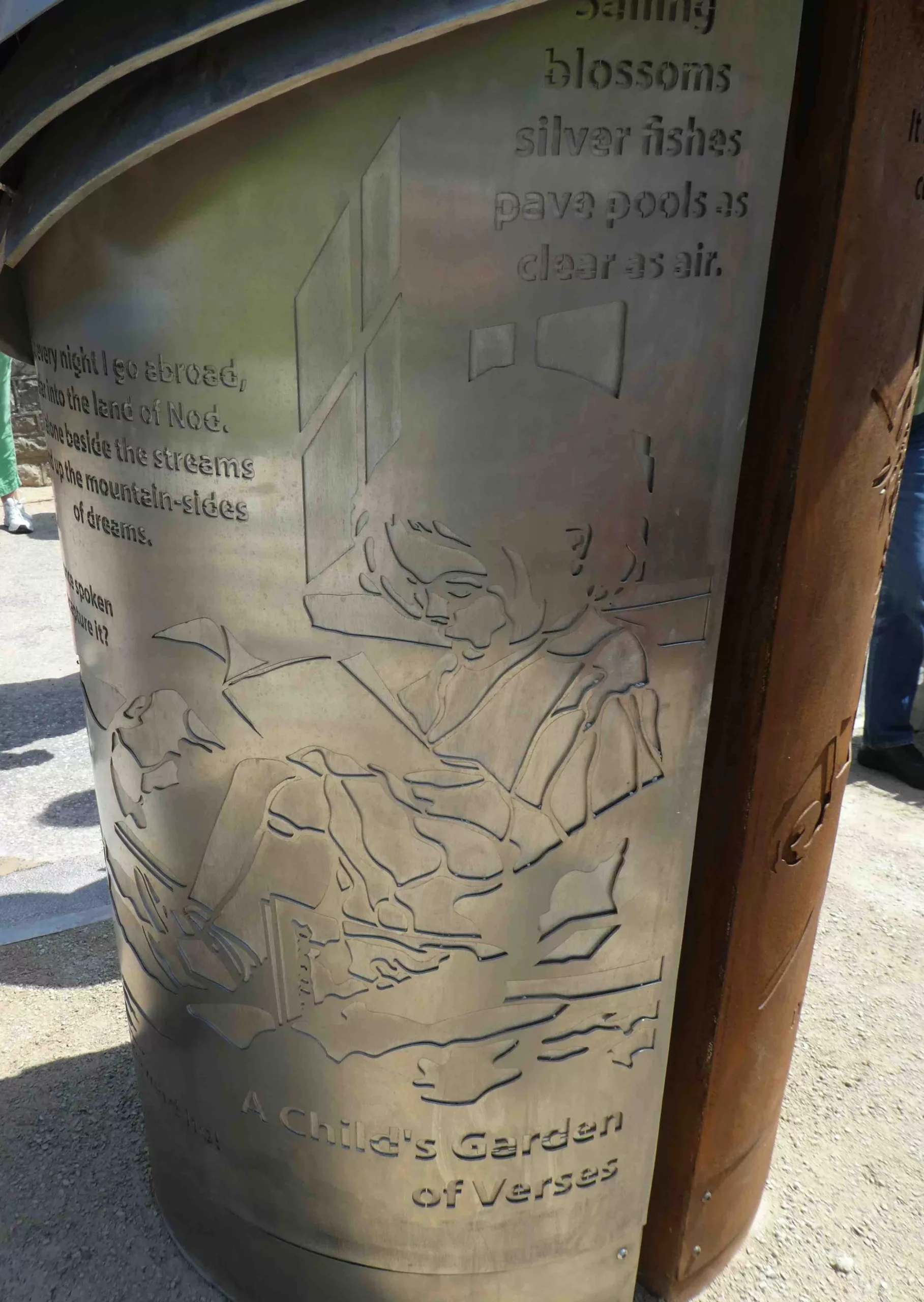
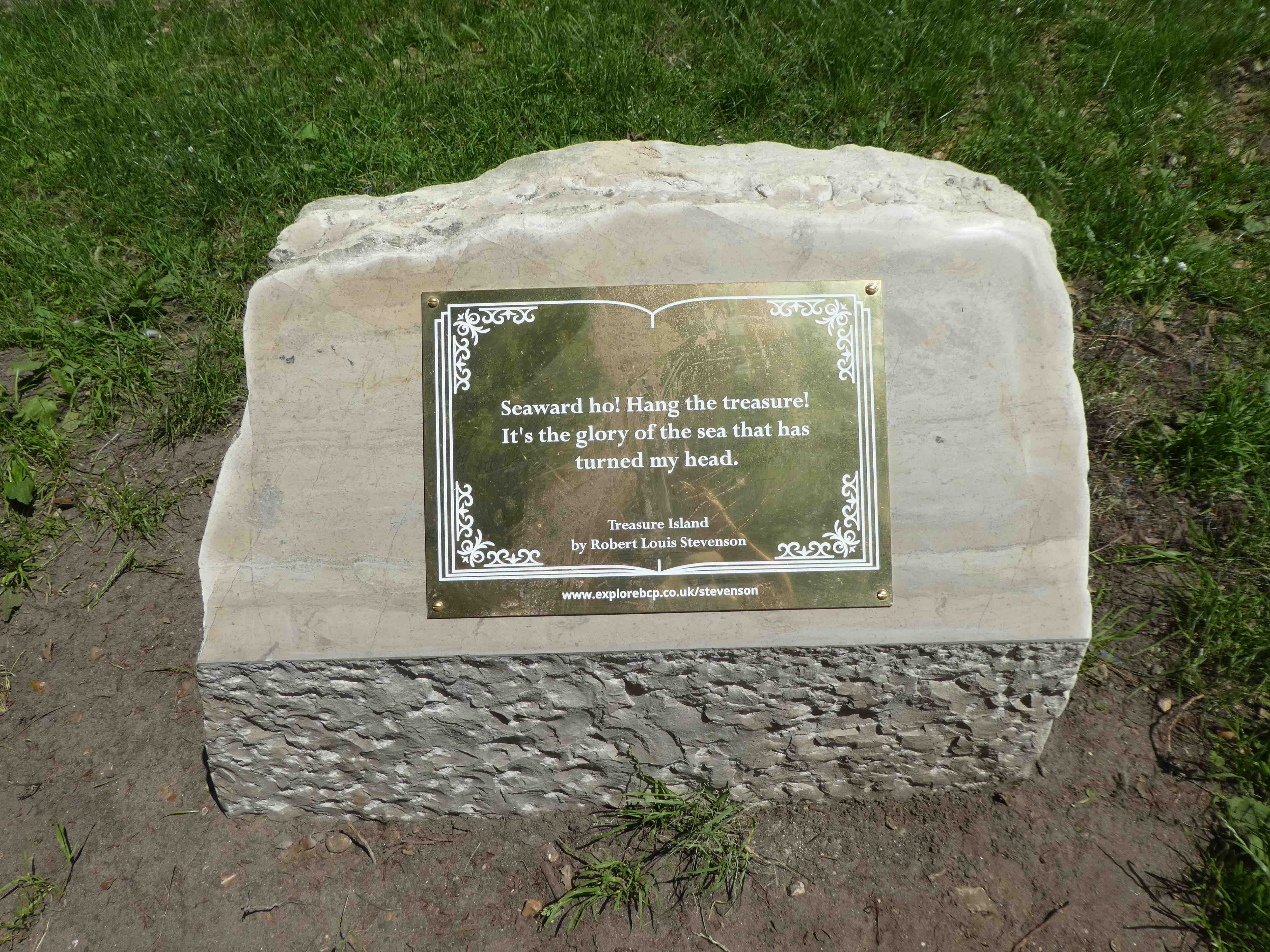
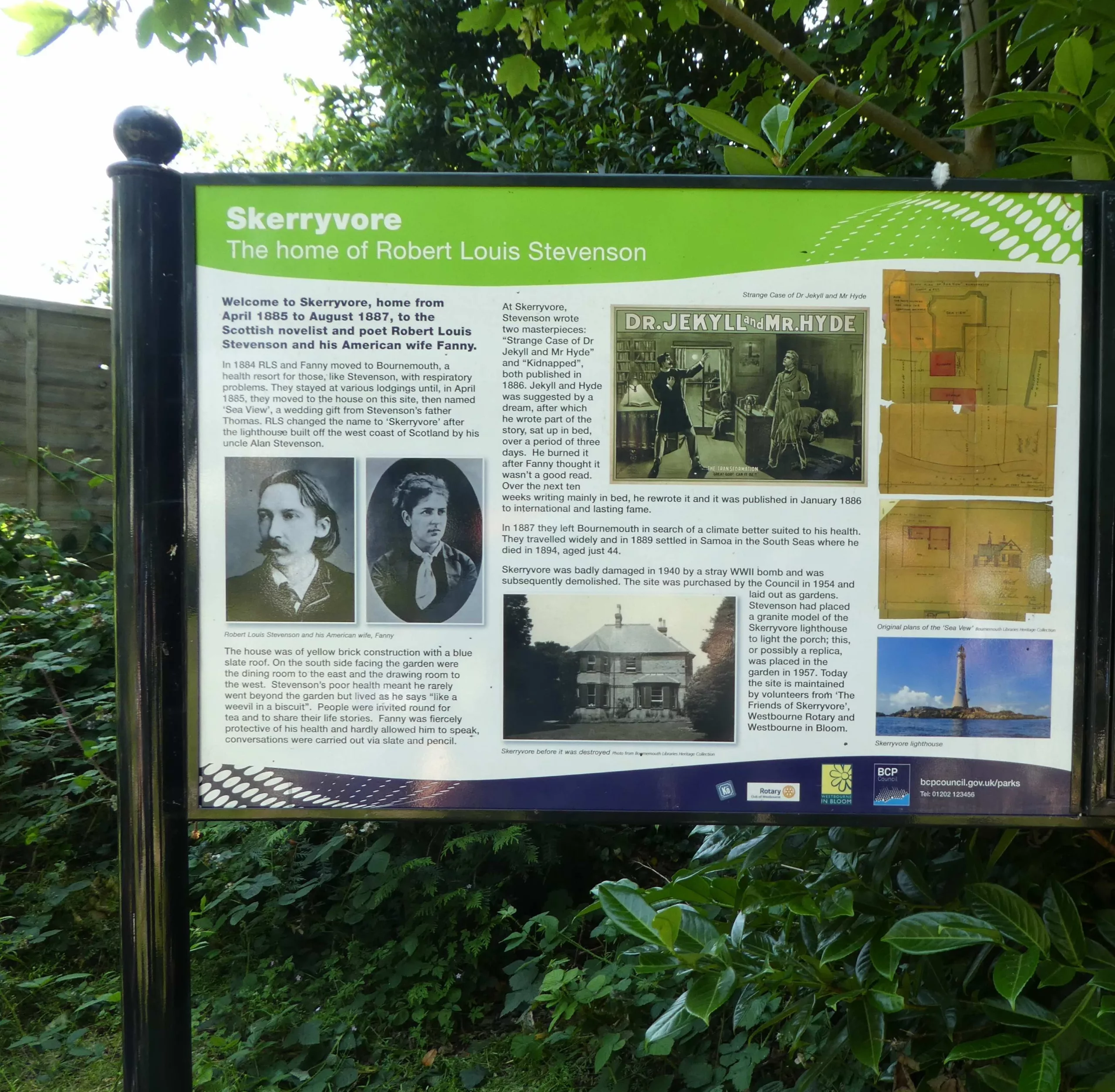
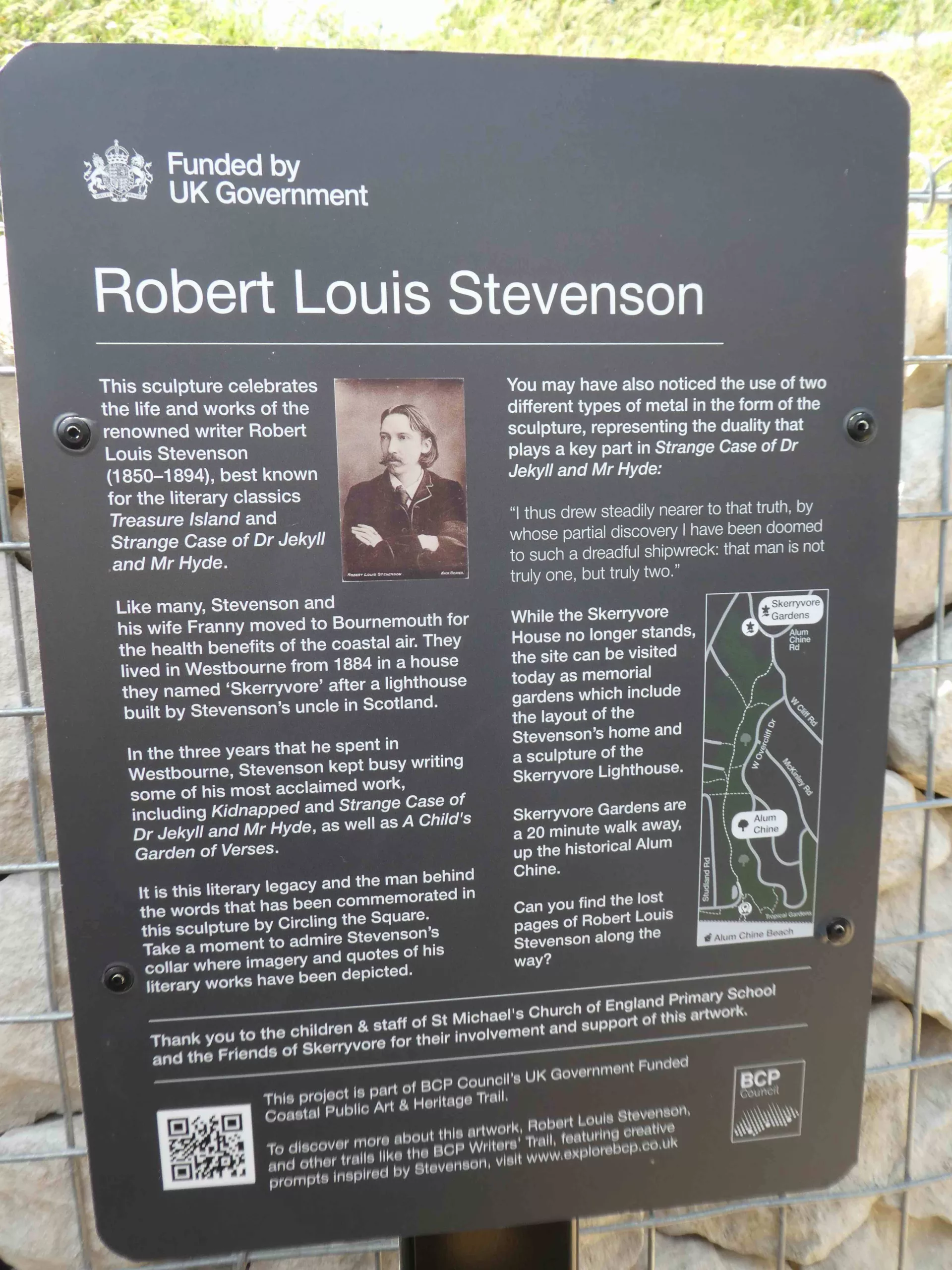
Skerryvore Garden is a 20-minute walk from the statue, and the path is dotted with ‘lost pages’ by Stevenson.
Skerryvore was destroyed by enemy action during the Second World War and post-war BCP had already turned the footprint of the house into a memorial garden. It had fallen on hard times and had been brilliantly rescued by the Reverend Chris Colledge and his merry band of volunteers, who formed the Friends of Skerryvore in recent times to look after the garden.
Bournemouth, Christchurch & Poole Council (BCP) developed a Coastal Art Trail programme to deliver 10 pieces of public art along the coastline. The aims of the Trail is to provide free opportunities for people to enjoy public art, improve the public realm, celebrate and improve knowledge of BCP’s cultural and heritage assets, and encourage people to explore the seafront away from the traditional ‘honeypot’ locations such as Bournemouth Pier.
At the opening ceremony, representing the European Cultural Route “In the Footsteps of Robert Louis Stevenson” and the RLS Club of Edinburgh was Martin White from North Berwick, and Mark and Fiona Steeds from Bristol who also represented the Long John Silver Trust. Huge congratulations to all concerned for devising such a fitting tribute to one of Britains greatest writers.